




Industrial Mini PC vs PLC: Which Is Better for Industrial Automation?
Industrial automation systems use both Programmable Logic Controllers (PLCs) and industrial computers. Although they can work together, they are designed for different tasks.
A PLC focuses on reliable machine control. An industrial Mini PC provides more computing flexibility for software applications, data processing, networking, and system integration.
So, which one should you choose?
1. What Is the Difference Between a PLC and an Industrial Mini PC?
A PLC is designed to control machinery through dedicated industrial I/O modules. It executes control logic, processes sensor signals, and operates actuators according to a programmed sequence.
An industrial Mini PC is an x86-based computer designed for industrial environments. It can run Windows or Linux applications, communicate with external devices, collect data, and connect industrial networks.
Feature | PLC | Industrial Mini PC |
|---|---|---|
Primary function | Machine control | Computing and system integration |
Operating environment | Dedicated control platform | Windows / Linux |
Programming | Ladder Logic, Function Blocks, Structured Text | C++, Python, C#, industrial software |
I/O | Dedicated industrial modules | Serial, LAN, USB, GPIO, expansion |
Data processing | Control-oriented | General-purpose computing |
HMI / SCADA | Usually through additional systems | Can run software directly |
Real-time control | Designed for deterministic control | Depends on OS and hardware configuration |
The most important distinction is that a standard industrial Mini PC does not automatically provide the deterministic control or safety functions of a PLC.
2. When Should You Choose an Industrial Mini PC?
An industrial Mini PC is particularly useful when an automation project requires more than basic machine control.
Typical applications include:
Industrial data acquisition: Collect information from sensors, meters, and controllers.
Protocol gateways: Connect serial devices and Ethernet-based industrial equipment.
SCADA and HMI: Run monitoring dashboards, visualization software, and industrial applications.
Edge computing: Process production data locally before sending it to a central server.
Machine vision: Run image-processing and inspection applications.
Remote monitoring: Connect industrial equipment to cloud platforms and remote management systems.
For these applications, an industrial Mini PC offers more flexibility in software selection, storage, networking, and computing resources.
3. When Should You Choose a PLC?
A PLC remains the better choice for direct machine control, especially when predictable response times and dedicated industrial I/O are essential.
Choose a PLC when your application involves:
High-speed machine sequencing.
Precise control of motors, valves, and actuators.
Safety-related control systems requiring certified hardware.
Extensive industrial I/O modules.
Established PLC programming and maintenance workflows.
For critical machine operations, replacing a PLC with a general-purpose computer may introduce unnecessary engineering and reliability risks.
4. Can an Industrial Mini PC and PLC Work Together?
Yes. In many modern automation systems, using both is a practical architecture.
The PLC handles real-time machine control, while the industrial Mini PC manages higher-level computing tasks.
For example:
Sensors send signals to the PLC.
The PLC executes machine-control logic.
The industrial Mini PC collects operating data through Ethernet or serial communication.
The Mini PC runs SCADA software, stores production records, and performs data analysis.
Production information is transmitted to an MES or cloud platform.
This architecture separates critical control operations from general-purpose computing.
Recommended Qotom Industrial Mini PCs
Qotom offers industrial Mini PCs with multiple serial interfaces, Ethernet connectivity, and embedded computing capabilities for automation integration.
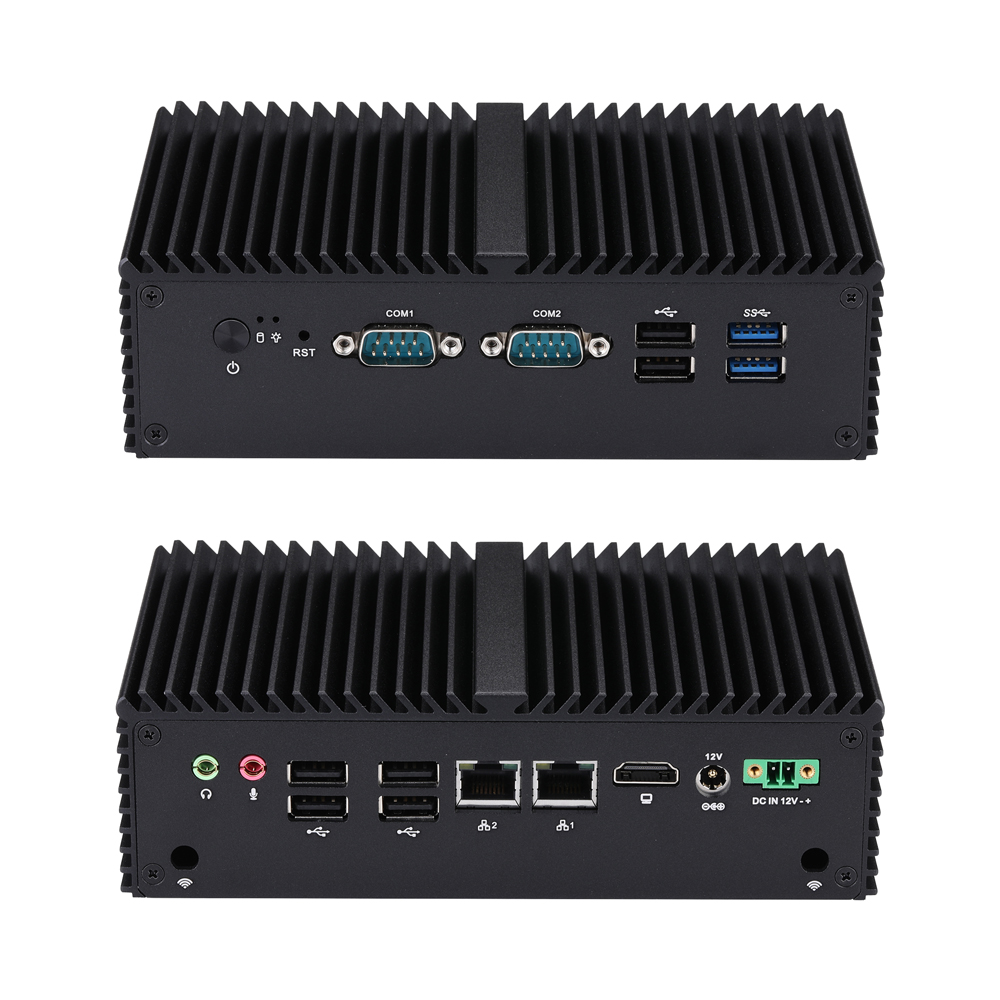
A compact fanless option featuring Intel Elkhart Lake processors, up to 32GB DDR4, 2 × Gigabit LAN, and 2 × RS-232 configurable as RS-485. It is suitable for industrial gateways, data acquisition, and controller communication.
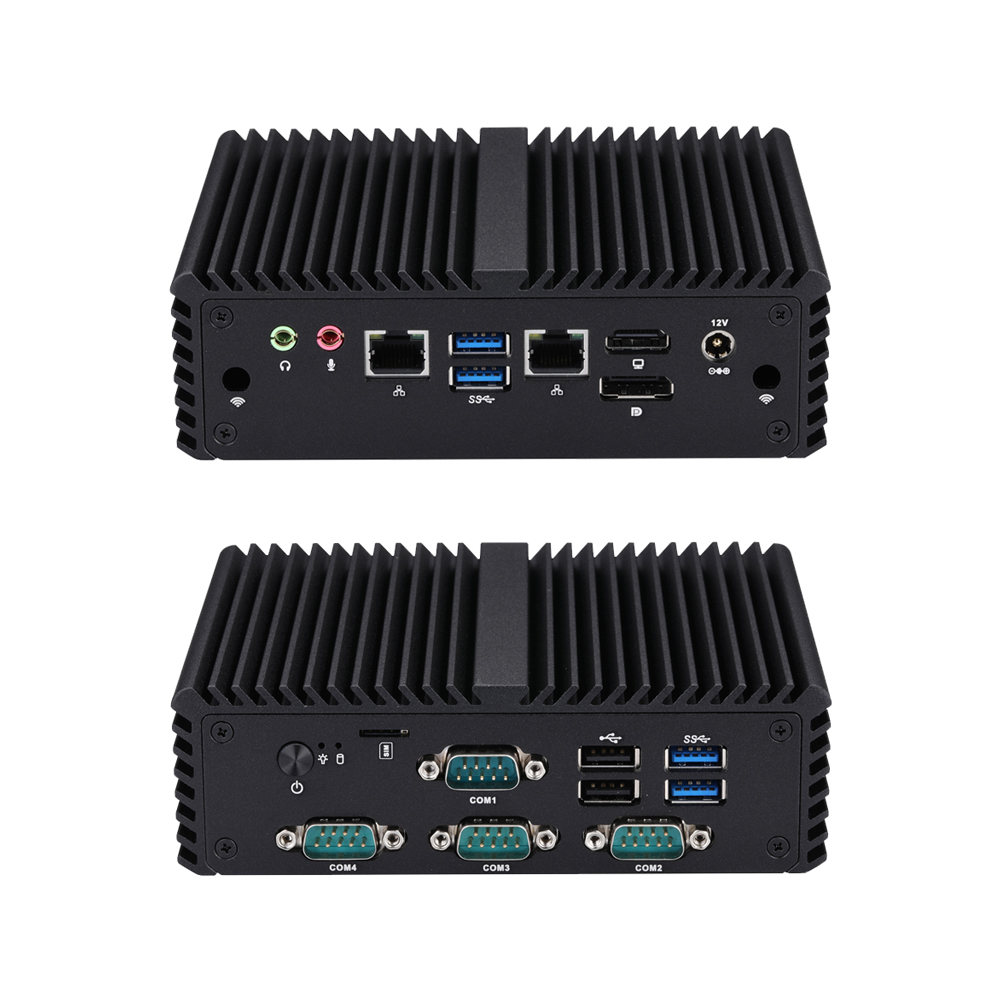
Designed for applications requiring more serial connectivity and computing flexibility. It supports 8th–10th Gen Intel U-series processor options, up to 32GB DDR4, 4 × RS-232, and dual Intel 2.5GbE LAN in a fanless chassis.
Both models include watchdog functionality. Select the appropriate configuration according to your application and device compatibility requirements.
Final Recommendation
PLCs and industrial Mini PCs are not direct replacements for each other. A PLC is ideal for deterministic machine control, while an industrial Mini PC is better suited to data processing, communication, visualization, and edge computing.
For many automation projects, combining both provides a more flexible and practical solution.